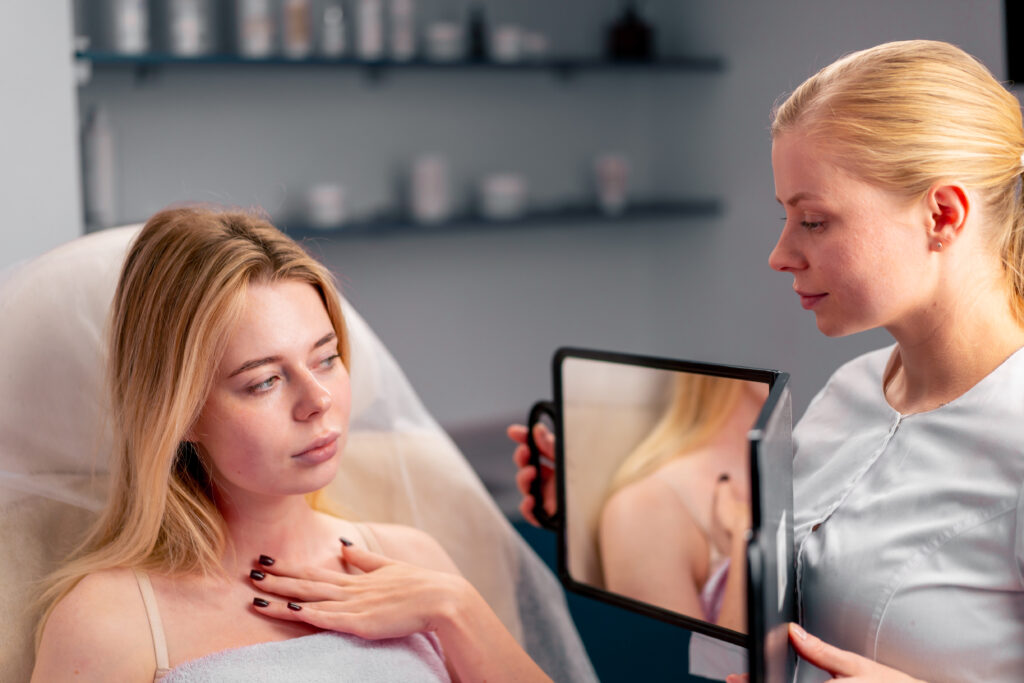
Teaching someone to check their own breasts is about more than finding changes. It builds body awareness, confidence, and a simple monthly habit that supports long term health. Below is a step by step teaching plan you can use in a clinic, at home, or in a support group. It covers language, timing, technique, adaptations after surgery or implants, and when to call a doctor.
Quick note: A breast self exam does not replace screening. Mammograms and clinical breast exams remain essential. If you or the person you are teaching notices a change, contact a healthcare provider.
Start with the “why” in simple language
When people understand why a habit matters, they are more likely to stick with it. Frame the goal as learning what is normal for their body so they can notice changes early. Avoid scary terms. Keep it warm and practical.
- “This helps you know what your normal tissue feels like.”
- “Most lumps are not cancer, but changes deserve attention.”
- “We will practice a method so you feel confident doing it in minutes.”
If you need a ready made step guide you can share, use our plain language walkthrough here: how to do a breast self exam.
Decide the right timing
Hormones can make breasts feel different throughout the month. For people who menstruate, teach them to check 3 to 5 days after their period starts, when tenderness is lower. For those who do not menstruate due to menopause, pregnancy, or medical treatment, pick the same day each month, for example the first Sunday.
Tip for teachers: Suggest a calendar reminder or a phone alarm. Habit beats willpower.
Set the tone and create comfort
Privacy and comfort matter. Use a private room. Offer a robe or loose shirt. Ask permission before any demo. You can teach with a silicone model or by guiding their own hand over clothing first.
Use clear, body neutral language:
- “Use the pads of your three middle fingers.”
- “Use light, medium, then firm pressure.”
- “Move in a pattern so you cover the whole area.”
Teach the three part method
You are teaching a routine that is easy to remember and repeat.
1) Look in the mirror
Arms at sides. Then hands on hips. Then arms raised overhead. Finally, lean forward a bit if balance allows. You are looking for:
- New asymmetry or change in size or shape
- Dimpling or puckering of the skin
- Redness, rash, or swelling
- Nipple inversion that is new or different
- Discharge from either nipple
If a learner wants a quick refresher later, point them to our imaging guides for context on screening choices: types of mammograms and why they matter.
2) Feel while standing or in the shower
Soapy skin helps fingers glide. Ask them to raise the arm on the side they are checking and place the hand behind the head. With the opposite hand, use the pads of the three middle fingers to make small circles about the size of a dime.
- Pressure levels: light to feel tissue near the skin, medium for the middle layer, firm to feel near the chest wall. One circle per level before moving on.
- Patterns: choose one and stick with it each month.
- Vertical strips from the collarbone down to the bra line and back up
- Circular pattern moving from the outer edge toward the nipple
- Pie wedge pattern, like slices, back and forth to the nipple
- Vertical strips from the collarbone down to the bra line and back up
Cover the full area from the collarbone to the bra line and from the middle of the chest to the side seam, including the armpit. Lymph nodes are there too.
3) Feel while lying down
Place a small pillow or folded towel under the shoulder on the side you are checking. This spreads the tissue evenly. Repeat the same finger circles, pressures, and patterns. Gently squeeze each nipple to check for discharge if not pregnant or nursing.
What changes deserve a call
Make a simple rule for learners: “New, one sided, or persistent.” Encourage them to call a provider if they notice:
- A lump or thickening that feels new or different from the rest of the tissue
- Skin changes like dimpling, scaling, or a rash that does not clear
- Nipple changes such as inversion that is new, or discharge that is bloody or clear and not related to nursing
- Swelling, warmth, or redness that does not improve in a few days
- Pain that is focused in one spot and does not resolve across a cycle
Also teach what is often normal: lumpy rope-like areas near the outer upper quadrant, tenderness around the period, and symmetrical nodularity. When in doubt, check it out.
Adapting the lesson for special situations
After breast surgery or going flat
If someone has had a mastectomy or partial surgery, they can still do a regular chest wall and scar line exam. Use the same three pressures over the scar and the entire chest area, plus the armpit and collarbone. For more context on exams and follow up imaging, share: do I still need breast imaging after mastectomy.
With implants
Teach the same mirror check and patterns. Emphasize firm pressure to feel the tissue between skin and implant. If something feels tethered or new, they should call their surgeon or breast care provider.
During pregnancy or nursing
Breasts are fuller and more tender. Teach gentle pressure and stress that clogged ducts can feel like lumps but usually improve with warm compresses and feeding. Any fever, redness, or discharge that seems unusual should be checked.
Limited mobility or low vision
Offer seated mirror checks, use a hand mirror for angles, and teach the partner method with consent. A partner can mirror the same pattern under guidance.
Teaching tips that boost confidence
- Use a model first. Let them practice the circle size and pressure levels on a silicone demo or a folded towel with a seed “lump” inside.
- Name the pattern out loud. “Vertical stripes, right breast, standing.” It helps memory.
- Normalize asymmetry. Most people have one breast that sits higher or feels more nodular.
- Reinforce repetition. Same day, same method, short and consistent.
Common myths to address
- “If I do this, I will find cancer and panic.” Most changes are not cancer, but this skill helps you report concerns early and clearly.
- “I am young, I do not need to learn this.” Learning body awareness early is useful even before routine imaging begins.
- “A normal check means I can skip mammograms.” Self exams do not replace screening. Imaging finds things that fingers cannot feel.
Document and follow up
Encourage learners to jot a quick note in their phone after each exam. Date, side, pattern used, and any observations. This record helps them notice trends and gives a clear report if they call a provider.
If someone is at higher risk due to family history or a past diagnosis, discuss screening plans with a provider. Our overview of risk and planning can help frame that talk: are you at high risk for breast cancer.
A gentle closing script you can use
“You did great. You know your body best. Keep this simple routine once a month, and if anything feels new, one sided, or persistent, call your provider. You are not alone.”Medical disclaimer: This guide is for education. It does not diagnose, treat, or replace professional care. Always consult your healthcare provider about any concerns.