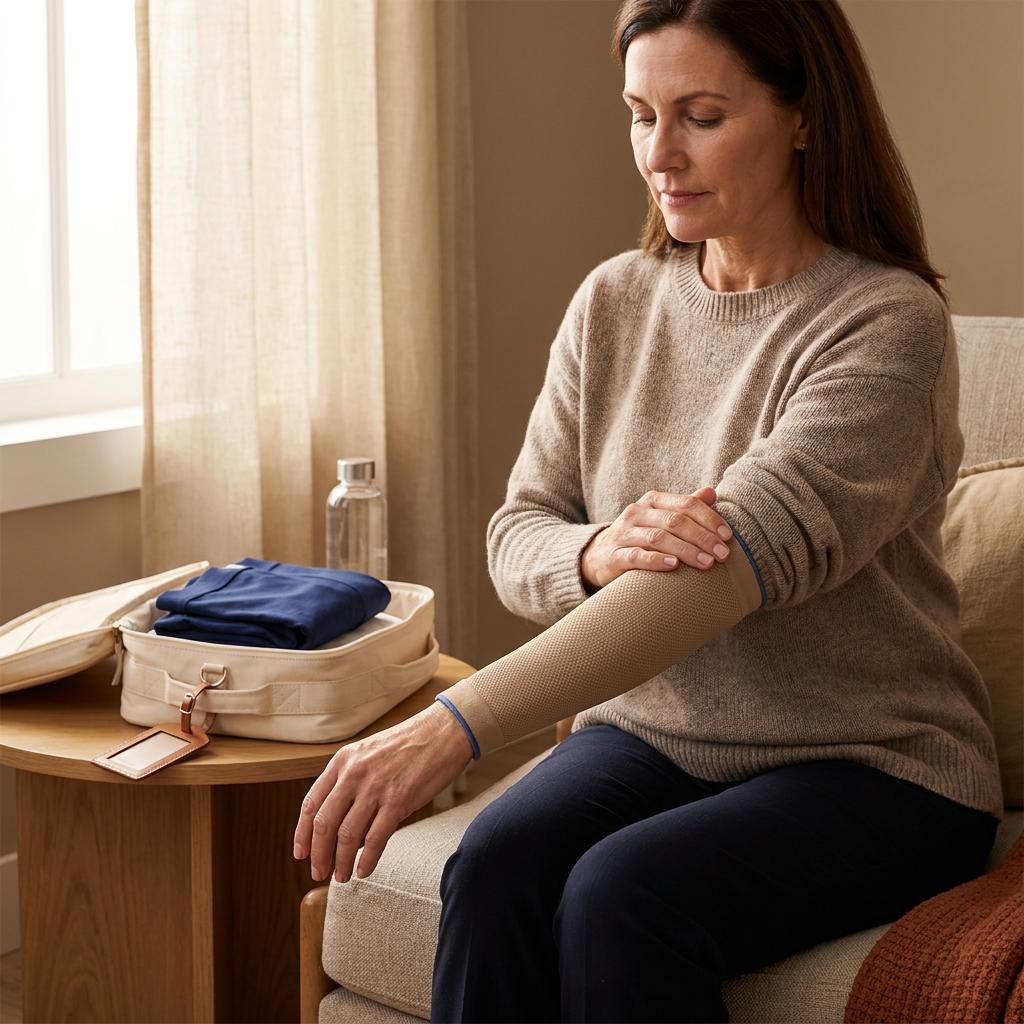
You already manage lymphedema every day. A flight is just a few more hours of doing what you know how to do, with a little extra preparation.
The difference between a comfortable flight and a rough one usually comes down to what happens before you get to the airport. Most travel advice for lymphedema stops at “wear compression and drink water.” That covers the basics, but it skips the part that matters most: making sure your compression garment actually fits the way it should right now, not the way it fit six months ago.
Here is what our certified fitters walk women through before they fly.
A Week Before Your Trip: Check Your Garment Fit
Your body changes. Lymphedema fluctuates. A compression sleeve or gauntlet that fit perfectly at your last appointment may not provide the same support today, especially if your volume has shifted since your last fitting.
Schedule a quick check with your fitter at least a week before your trip. They can measure your current volume, confirm your compression class (the level of pressure your garment provides) still matches what your body needs, and make adjustments if anything has changed. If your garment has stretched or lost elasticity, that is better to know now than at 35,000 feet.
If you use an adjustable wrap instead of a traditional sleeve, this is also the time to make sure you are comfortable putting it on and adjusting it yourself. Wraps give you more flexibility for swelling that changes throughout the day, which can be helpful on longer flights.
Key takeaway: A pre-trip fitting check takes 15 minutes and can make the difference between a comfortable flight and hours of discomfort.
Travel Day Morning: Your Garment Goes On First
Put your compression garment on before you leave for the airport. Your arm or leg can start retaining fluid the moment you are upright, moving through security lines, and sitting in terminal chairs. Waiting until you board means you are already behind.
If you are flying to a warm-weather destination, this is especially true. Heat and humidity increase swelling, so starting with compression already in place gives your body a head start.
Pack a second garment in your carry-on. If your flight is delayed or you are connecting through a long layover, you want a fresh option. Compression garments lose some effectiveness when they are damp from sweat or extended wear.
A note about TSA: compression garments are not flagged by security scanners. If you wear a sleeve, gauntlet, or wrap through the checkpoint, you should not need to remove it. Some women feel more comfortable carrying a note from their lymphedema therapist, but it is not required.
Key takeaway: Put your garment on at home, not on the plane. Pack a backup in your carry-on.
In the Air: Small Movements, Steady Pressure
Cabin pressure drops during flight. Lower pressure means your lymphatic system has to work a little harder to move fluid, which is exactly why your compression garment matters. The garment provides the external pressure your body needs to keep fluid from pooling.
Beyond wearing your garment, a few habits help:
- Move your fingers, hands, or toes every 20 to 30 minutes. Gentle pumping motions encourage lymph flow. You do not need to get up every time, though walking the aisle when you can is helpful.
- Slow, deep breathing from your belly. Diaphragmatic breathing (breathing that expands your stomach rather than your chest) activates the thoracic duct, your body’s main lymph drainage channel. A few slow breaths every hour supports what your garment is already doing.
- Drink water steadily. Dehydration thickens lymph fluid and makes it harder to move. Sip throughout the flight rather than drinking a large amount at once.
On flights longer than four hours, pay attention to how your arm or leg feels. Some women notice more tightness or fullness than usual. That is your body responding to the cabin environment, and it is normal. If your garment feels too tight, you can loosen an adjustable wrap slightly. If you are in a sleeve, gentle self-massage toward your trunk can help relieve pressure.
If you are traveling during the holidays or other high-stress periods, keep in mind that salt-heavy airport food and travel stress can compound swelling. Packing your own snacks gives you more control.
Key takeaway: Your compression garment does the heavy lifting in low cabin pressure. Movement and hydration support it.
After You Land: Keep Your Garment On a Little Longer
Do not take your compression garment off the moment you step off the plane. Your body needs time to readjust to normal pressure, and fluid that pooled during the flight needs time to move.
A good rule: keep your garment on for at least two hours after landing. If you flew more than four hours, consider wearing it for the rest of the day. Your lymphedema therapist can give you a more specific recommendation based on your history.
Once you are settled at your destination, gentle movement helps your body recalibrate. A short walk, some stretching, or a few minutes of light range-of-motion exercises can ease the transition. If you packed a second garment, now is a good time to switch to it.
Watch for signs that something needs attention in the days after your flight: unusual redness, increased warmth, or swelling that does not respond to your normal routine. These can signal the early stages of cellulitis (a skin infection that people with lymphedema are more susceptible to). If you notice these changes, contact your lymphedema therapist or doctor.
Key takeaway: Keep compression on for at least two hours after landing. Watch for unusual redness or warmth in the days that follow.
Your Flight Checklist
Before you pack your suitcase, here is a quick reference:
- One week out: Schedule a fitting check to confirm your garment still fits your current volume
- Morning of: Put your compression garment on before you leave home
- Carry-on bag: Backup garment, water bottle, low-sodium snacks
- In flight: Move every 20-30 minutes, breathe deeply, sip water
- After landing: Keep your garment on for at least two hours; switch to a fresh one if needed
- Days after: Monitor for redness, warmth, or unusual swelling
If you are packing for a longer trip, bring enough garments for one per day of travel plus one spare. Compression garments need to be washed and air-dried between wears to maintain their elasticity.
Come In Before You Fly
The best thing you can do for a comfortable flight is make sure your compression fits your body today. Not last month. Not at your last appointment. Today.
Front Room’s certified fitters can check your garment, adjust the fit if your volume has changed, and help you choose the right option for your trip. If you have never flown with lymphedema before, a pre-travel fitting is the single most useful thing you can do.
Schedule your fitting at any of our three locations, including our offices inside the Herbert Herman Cancer Center and Karmanos/McLaren Greater Lansing.