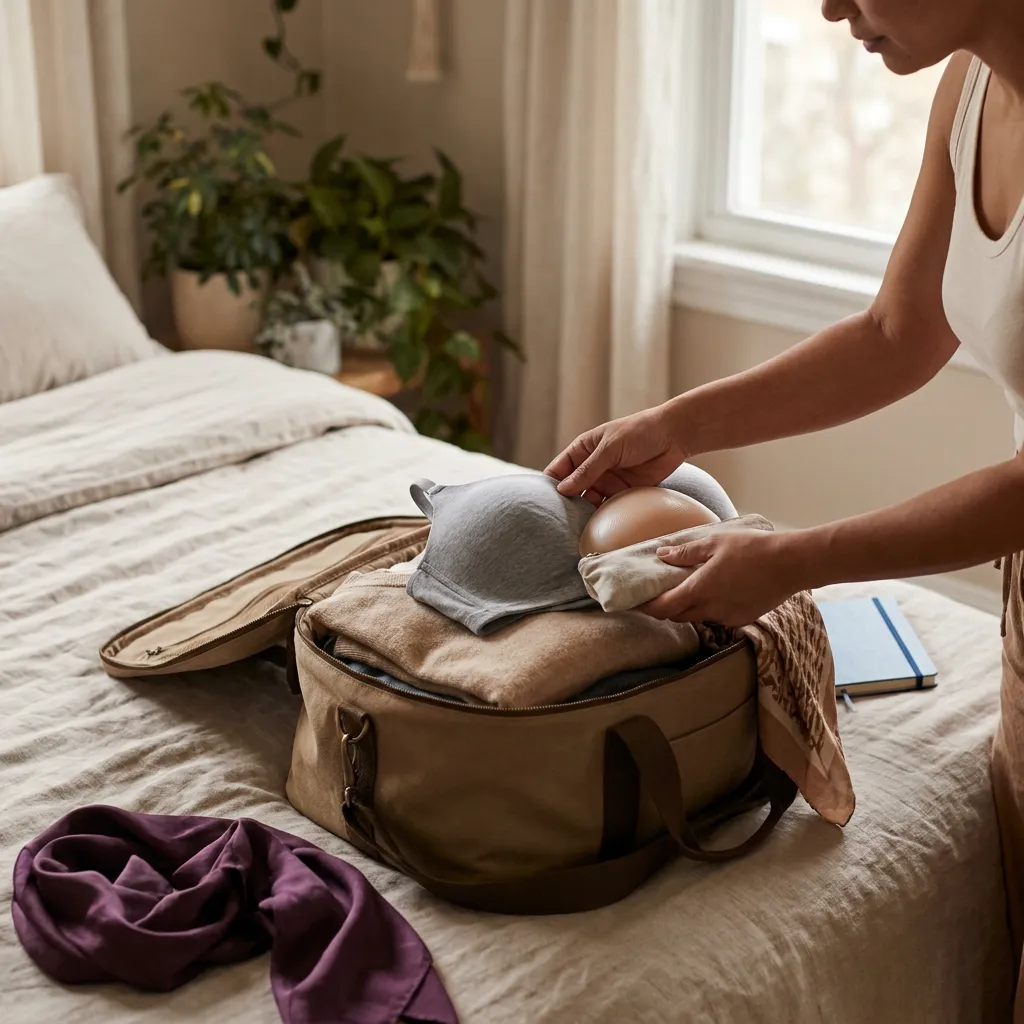
Your trip starts long before the airport. It starts at your dresser, deciding which bra to pack, whether your form will survive a checked bag, and what happens if a body scanner flags something it doesn’t recognize. Those questions are worth answering before you zip the suitcase shut.
At Front Room Underfashions, our certified fitters have helped thousands of women prepare for cruises, destination weddings, beach vacations, and cross-country flights. The advice that follows comes from those conversations.
What TSA Actually Does When You’re Wearing a Breast Form
Silicone breast forms are classified as medical devices. They’re exempt from the 3-1-1 liquid and gel rules, so you don’t need to pull them out or bag them separately.
Body scanners can’t identify silicone. When the scanner sees something it doesn’t recognize, it flags the area as an “anomaly.” That means a TSA agent may ask to do a brief pat-down of the flagged area. You are never required to remove your prosthesis during screening.
You can request a private screening at any point. It’s conducted by a same-gender officer, and you don’t need to explain why.
Two tools make the process smoother:
- TSA notification card. A printable card you hand to the agent to discreetly explain that you’re wearing a prosthesis. No verbal explanation needed.
- TSA Cares Helpline: 1-855-787-2227. Call at least 72 hours before your flight. An agent will note your needs and coordinate assistance at the checkpoint.
Wearing a non-underwire bra through the scanner reduces the chance of triggering a metal detector, which means fewer follow-up steps.
Key takeaway: Silicone forms are medically exempt from TSA liquid rules, and you’re never required to remove a prosthesis during screening.
How to Pack Breast Forms So They Actually Survive the Trip
Always carry your forms in your carry-on. Checked luggage gets tossed, compressed, and sometimes lost. Your forms shouldn’t be in there.
A breast form storage case (brands like ABC make travel-specific cases) protects the silicone from getting crushed. Place your form inside a ziplock bag first, then into the case cradle. The bag catches any condensation and keeps the form clean.
If you’re packing for a longer trip, bring a lightweight backup form. Foam or fiberfill forms take up almost no space, weigh next to nothing, and give you an option if your primary silicone form needs a break from heat or humidity.
For trips that involve vacationing after breast surgery, the same packing principles apply with extra attention to post-surgical garments.
Key takeaway: Carry your forms in your carry-on inside a protective case. A lightweight backup gives you flexibility for longer trips.
What to Expect During the Flight
Altitude changes affect silicone. You may notice small black dots appearing inside your form during the flight. This happens because air pressure changes cause tiny air pockets to shift within the silicone. It’s temporary and cosmetic only. The dots disappear on their own within about two weeks, and they don’t damage the form.
Some women feel like their form expands slightly at altitude. The form won’t pop or break. The sensation is mild, and it settles once you’re back at ground level.
For long flights, comfort matters more than appearance. A soft-cup, non-underwire mastectomy bra that works for active days is often the best choice for hours in a seat. If you’re dealing with swelling from sitting, especially if you have lymphedema concerns, compression garments and movement breaks help. Flight-related swelling can be a real trigger worth watching for.
Key takeaway: Small dots in silicone forms at altitude are temporary and harmless. Wear a comfortable, non-underwire bra for long flights.
Beach, Pool, and Hot-Weather Travel
Heat and humidity soften the adhesive on some breast forms, so check your form type before a tropical trip. Silicone forms designed for swimwear hold up well in water, but they do retain heat against skin in direct sun.
Rinse your form with cool water after swimming in chlorine or saltwater. Pat dry and let it air out before putting it back in the case. Saltwater and pool chemicals can degrade the silicone over time if they sit.
If you’re packing a wig for the same trip, the storage considerations are similar. Keeping your wig travel-ready alongside your forms means both stay protected in the same section of your bag.
Key takeaway: Rinse forms after swimming and let them air-dry. Heat-friendly form options exist for tropical travel.
International Travel and Your Rights
The Air Carrier Access Act (ACAA) protects travelers with medical conditions from discrimination on U.S. airlines and flights departing from the U.S. That means no airline can deny you boarding or treat you differently because you’re wearing or carrying a prosthesis.
International airports operate under their own screening protocols. Some are more relaxed than U.S. airports; others may be less familiar with breast prosthetics. Before you travel, look up the security procedures for your destination country. The TSA notification card translates well in most English-speaking countries, and having a note from your provider in the local language can help elsewhere.
If you’re traveling soon after surgery, your doctor’s clearance comes first. The timeline for flying after a mastectomy depends on your procedure and healing progress. Understanding what each surgery means for your recovery helps you plan a realistic travel window.
Key takeaway: The Air Carrier Access Act protects you on U.S. flights. Research your destination’s screening protocols before international travel.
Your Pre-Trip Packing List
A quick reference for what to bring:
- Primary silicone form in a protective storage case
- Backup lightweight form (foam or fiberfill)
- Non-underwire bra for flights and long transit days
- Swimwear-compatible form if your trip involves water
- TSA notification card (printed)
- TSA Cares confirmation if you called the helpline
- Ziplock bags for form storage and post-swim rinsing
- Doctor’s note for international travel or recent surgery
This isn’t everything you’ll pack, but it’s the part most women forget until they’re already at the airport.
Key takeaway: Print this list before your next trip. The five minutes it takes now saves stress at the gate.
Come In Before You Go
The best time to sort out your travel setup is before the trip, not during it. A pre-trip fitting lets you test which bra is comfortable for hours of wear, check that your form fits properly in your travel case, and pick up anything you’re missing.
Front Room’s certified fitters have walked thousands of women through exactly this. Whether it’s your first flight since surgery or your tenth cruise, we’ll make sure you’re packed and ready.
Schedule your free fitting or stop by any of our three locations.