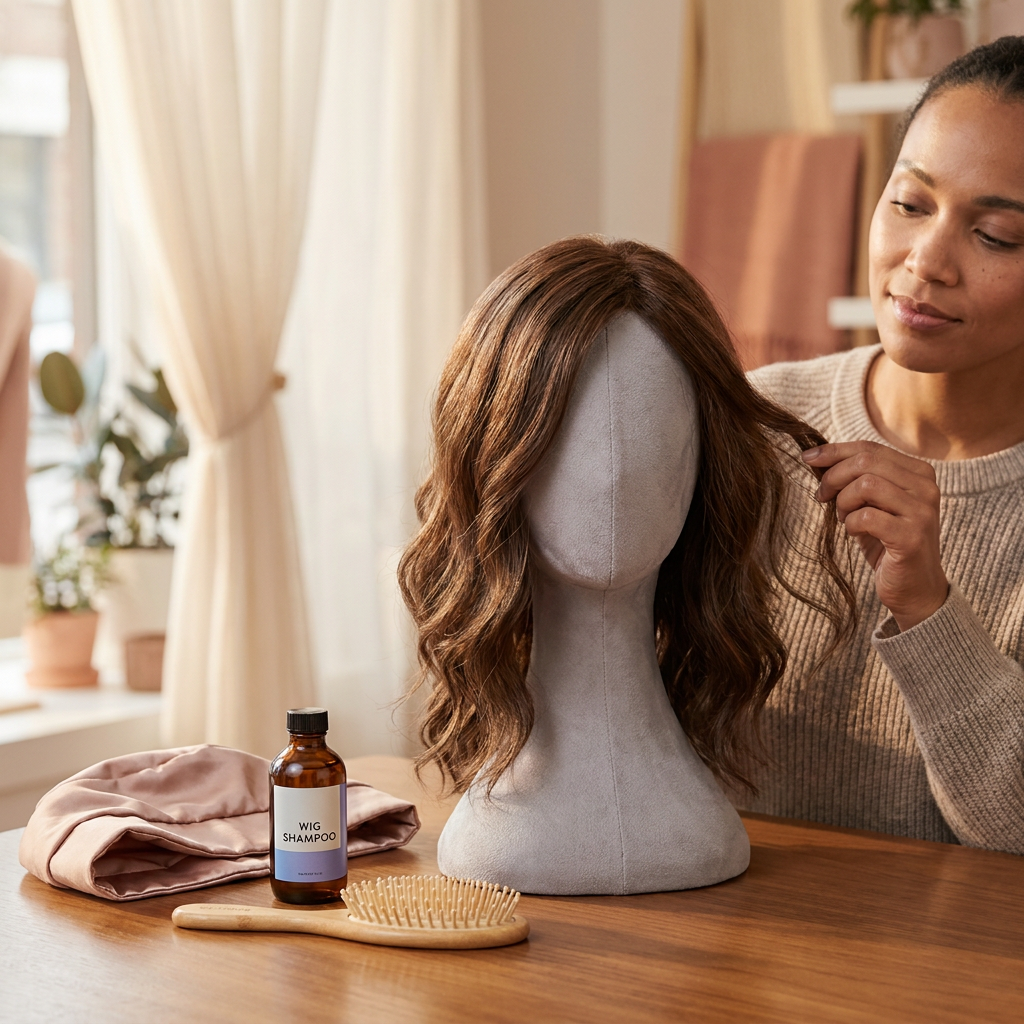
The cap is damp before you reach the car. It’s 85 degrees, the humidity is thick, and the wig that looked perfect at home now feels like it’s sliding. You adjust it at a stoplight, hoping nobody notices.
If that moment sounds familiar, it’s because most wig care advice ignores the calendar. The same routine that keeps your wig comfortable in October can make July miserable. And the products that save you from winter static can weigh your wig down once spring rolls around.
After 40-plus years of fitting wigs in Michigan, the team at Front Room Underfashions has walked thousands of women through every seasonal challenge a wig can throw at you. Here’s what actually works, season by season.
Summer: Heat, Humidity, and the Cap Problem
Summer is the hardest season for wig wearers. Heat builds under the cap, humidity makes everything feel heavier, and sweat can shorten the life of both synthetic and human hair wigs.
Start with the cap. A moisture-wicking wig cap liner makes the biggest difference. It pulls sweat away from your scalp and keeps the wig base from getting saturated. If you’re experiencing hot flashes from medication on top of the summer heat, a bamboo or cotton liner is gentler on sensitive skin than nylon.
Wash more often. In cooler months, you might wash every 10 to 15 wears. In summer, every 6 to 8 wears is safer. Sweat and sunscreen build up fast, and letting them sit breaks down fibers. Use a wig shampoo, not regular shampoo, and always air dry on a wig stand.
Watch your storage. Never leave a wig in a hot car or near a window. Heat reshapes synthetic fibers permanently. A breathable travel bag works better than a sealed container when you’re on the go. If you need tips on storing and traveling with wigs, Front Room has a full guide.
For more ways to stay comfortable when temperatures climb, take a look at hot weather hair hacks for wig wearers.
Key takeaway: Switch to a moisture-wicking cap liner and increase your wash frequency in summer to protect both the wig and your comfort.
Fall: The Transition That Catches You Off Guard
Fall feels like a break after summer, but it’s actually when most wig problems sneak up. The humidity drops fast, static starts early, and the product buildup from summer needs to come out.
Deep clean. Give your wig a thorough wash with a clarifying wig shampoo at the start of fall. Summer sunscreen, sweat, and leave-in products leave residue that dulls the fibers and weighs the wig down. A single deep clean resets everything.
Condition for the dry air ahead. A leave-in wig conditioner adds back moisture before winter strips it away. For human hair wigs, a light leave-in works the same way it would on your natural hair. For synthetic wigs, use only products labeled safe for synthetic fibers.
Assess the fit. If your wig feels looser in summer, it may tighten as temperature and humidity shift. Fall is a good time to check the fit and make adjustments before winter layers complicate things. Front Room’s fitters can help you evaluate whether fit or style needs attention heading into the colder months.
Key takeaway: Fall is maintenance season. Deep clean, condition, and check the fit before winter sets in.
Winter: Static, Dryness, and the Hat Dilemma
Cold air outside and dry heat inside create the worst conditions for wig fibers. Static makes the hair fly, dryness makes it brittle, and hats press everything flat.
Fight static before it starts. A light anti-static spray or a leave-in conditioner applied before you head out reduces flyaways. Some women keep a travel-size bottle in their bag for touch-ups. A wide-tooth comb handles tangles better than a brush when fibers are already dry.
Add humidity at home. A humidifier in the room where you get ready helps both your wig and your scalp. If you’re dealing with skin sensitivity from indoor heating — especially after treatment — the extra moisture makes a noticeable difference.
Hats and wig fit. Knit hats and beanies press down on wig fibers and can shift the cap. A satin-lined hat or a satin cap underneath protects the hair and keeps the wig from slipping. If you find that your wig feels cold, layering a thin thermal cap under the wig adds warmth without adding bulk.
Key takeaway: Static spray, a humidifier, and a satin-lined hat are your winter essentials for keeping a wig comfortable and looking natural.
Spring: Rain, Allergens, and Fresh Starts
Spring brings its own set of challenges. Rain can ruin a style in minutes, pollen settles on fibers faster than you’d expect, and the product routine from winter needs to change again.
Protect from rain. A light scarf or an umbrella is the simplest defense. If the wig does get wet, gently blot it with a towel and let it air dry on a stand. Never wring or rub the fibers. For synthetic wigs, rain won’t damage the fiber itself, but it can flatten the style.
Shake off allergens. Pollen, dust, and outdoor allergens cling to wig fibers the same way they cling to natural hair. Give the wig a gentle shake after being outside, and wash it a little more frequently during peak allergy weeks. This is especially helpful if you notice scalp irritation that wasn’t there in winter.
Lighten your products. Switch from the heavier leave-in conditioners you used in winter to lighter formulas. Spring humidity is coming back, and heavy products will weigh the wig down once the air gets thicker.
Spring is also a good time for a professional check-up. If your wig has been through three seasons of wear, a certified fitter can spot thinning, stretched caps, or styling issues you might not notice day to day. If you’re wondering whether it’s time to switch wigs for the new season, a fitting appointment takes the guesswork out of it.
Key takeaway: Spring is the time to lighten your routine, clean off allergen buildup, and get a professional fit check before summer.
Synthetic vs. Human Hair: How Seasonal Care Differs
Not every wig responds to the seasons the same way. Here’s a quick comparison.
| Synthetic | Human Hair | |
|---|---|---|
| Summer | No heat styling needed, but fibers can’t be reshaped if humidity flattens the style. Wash with cool water only. | Can be restyled with low heat. Use a heat protectant and wash with a moisturizing wig shampoo. |
| Fall | Clarifying wash to remove buildup. Use only synthetic-safe conditioners. | Clarifying wash plus a deep conditioning treatment. Regular conditioners are fine. |
| Winter | Anti-static spray is essential. Static affects synthetic fibers more than human hair. | Leave-in conditioner prevents dryness. Argan or jojoba oil on the ends helps with brittleness. |
| Spring | Shake pollen off gently. Lighter detangling spray replaces winter leave-in. | Light leave-in conditioner and a wide-tooth comb for post-rain tangles. |
Key takeaway: Synthetic wigs need more help with static and heat damage prevention, while human hair wigs benefit from the same seasonal conditioning your natural hair would.
When to Come In
Seasonal care keeps your wig looking good between visits, but some things are easier with a certified fitter in the room. Cap adjustments, deep conditioning treatments, fit checks after weight or body changes, and help choosing the right seasonal products are all part of what the team at Front Room does.
If your wig has been through a few seasons, or if you’re starting treatment and not sure what to expect, schedule a free fitting. Crystal, Heather, and the rest of the team will walk you through everything.