You spent real time finding a wig that fits right and looks like you. Now it’s sitting on your dresser next to a water glass, and you’re not entirely sure that’s okay.
Most wig care advice online reads like a product catalog: buy a stand, buy a case, buy our shampoo. That’s fine if you own one wig and treat it like a hat. But if you’re building a small collection, rotating between a daily wig and a going-out wig, or managing your first wig after hair loss, you need an actual system.
Here’s what our certified fitters at Front Room tell clients every day about keeping wigs in good shape at home and on the road.
Set Up a Wig Station at Home
The best wig storage starts with picking the right spot in your house. Wigs need a cool, dry area away from direct sunlight. That rules out bathrooms (too humid), windowsills (UV damage), and the top of your dryer (heat warps cap construction).
A bedroom closet shelf or a corner of your vanity works well. The goal is consistent temperature and low humidity.
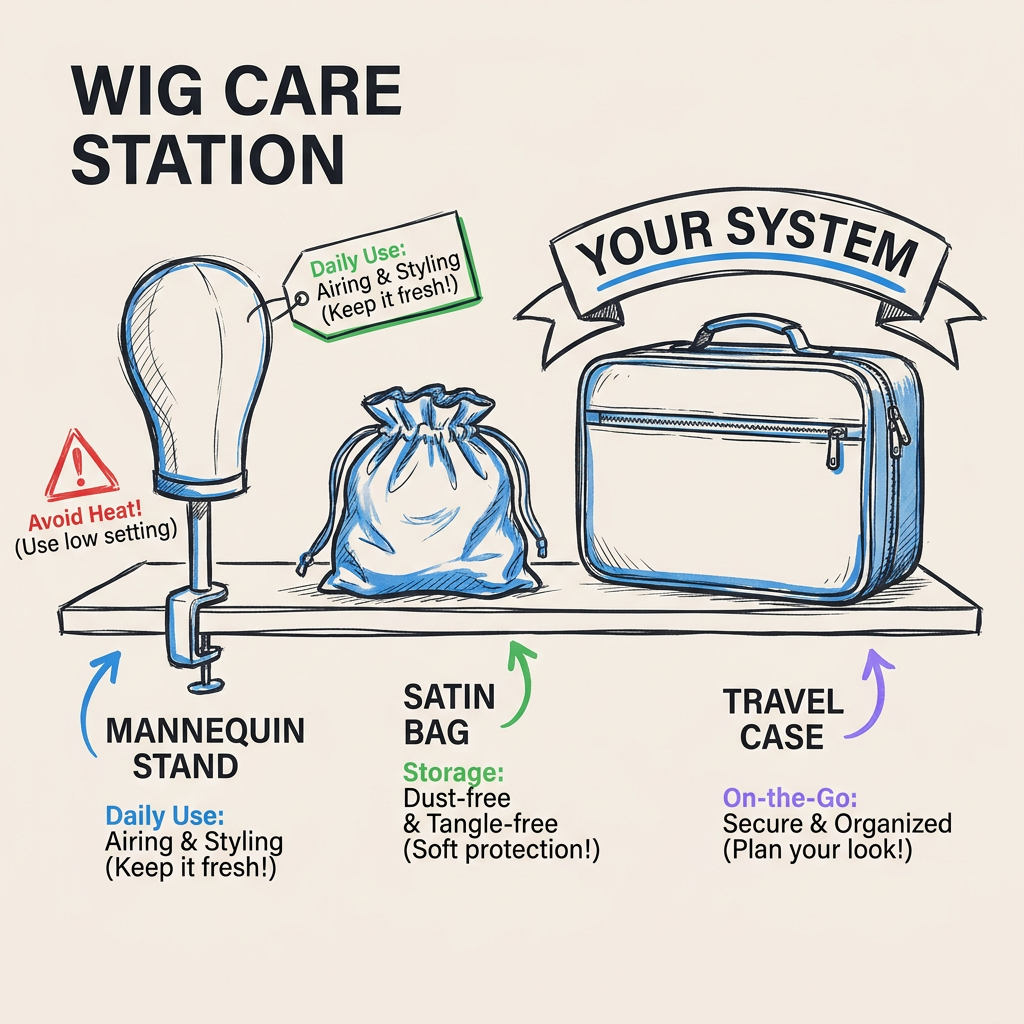
For your daily wig, a wig stand or mannequin head keeps the cap shape intact between wears. Canvas heads are better than Styrofoam because they breathe and won’t stretch the cap over time. Place the wig on the stand, smooth the fibers gently with your fingers, and let it air out overnight.
For wigs you’re not wearing regularly, store them in a silk or satin-lined bag. These fabrics prevent tangling and reduce static, especially on synthetic fibers. Gently turn the wig inside out, lay it flat or loosely fold it, and tuck it into the bag. Avoid plastic bags because they trap moisture and can cause odor or mildew.
If you own three or more wigs, a dedicated storage box with compartments keeps everything organized and dust-free. Label each compartment if you’re rotating by season or occasion.
Key takeaway: Give your daily wig a stand and your backup wigs a satin-lined bag. Keep everything away from heat, humidity, and direct light.
Synthetic vs. Human Hair: Storage Differences That Matter
Synthetic wigs and human hair wigs need slightly different care, and that extends to how you store them.
Synthetic wigs hold their style through heat-set memory. That’s an advantage for storage because the curls or waves come back after you take the wig out of the bag. But synthetic fibers are more vulnerable to heat damage. Keep them far from radiators, heating vents, and sunny windows. If your home gets warm in the summer, staying cool in your wig matters for storage too.
Human hair wigs behave like your own hair. They can frizz in humidity, flatten under pressure, and lose their style over time. Before storing a human hair wig, gently detangle it with a wide-tooth comb and let it air dry completely. Storing it damp is the fastest way to ruin the hair. For longer-term storage, a light spritz of leave-in conditioner before bagging helps prevent dryness.
Both types benefit from occasional airing out. If a wig has been stored for more than a month, take it out, place it on a stand for a few hours, and let the fibers relax.
Key takeaway: Synthetic wigs need heat protection. Human hair wigs need moisture control. Both need air.
How to Pack a Wig for Travel
Traveling with a wig adds a layer of planning, especially if this is your first trip since hair loss. The good news: it’s simpler than it feels once you have the right setup.
Start with a wig travel case. A hard-sided case with a mesh interior protects the wig from getting crushed in your luggage. Soft cases work for synthetic wigs with shorter styles that bounce back easily, but lace front wigs and longer human hair pieces need the structure of a hard case.
Packing steps:
- Place the wig on a wig cap or wrap it in a silk scarf to hold its shape.
- Set it inside the travel case, crown down.
- Fill any empty space with tissue paper to prevent shifting.
- Pack the case in your carry-on, not your checked bag. Checked luggage gets tossed, compressed, and exposed to temperature extremes.
Airport security: Yes, you can bring a wig on a plane. TSA does not require you to remove a wig you’re wearing. If your wig is packed in your bag, security may open the case during screening, but that’s routine. If you’re wearing your wig through the airport, you won’t be asked to take it off.
For women managing wigs after medical hair loss, travel can feel vulnerable. Packing a backup wig cap or a comfortable head covering gives you options if you need a break from wearing your wig in a hotel room or on a long flight. If you’re packing after breast surgery too, a single packing checklist for all your personal items keeps the process calm.
Key takeaway: Use a hard-sided travel case, pack it in your carry-on, and bring a backup head covering for comfort.
Caring for Your Wig While You’re Away
Hotel rooms aren’t ideal wig environments. Air conditioning dries out human hair wigs. Humid climates puff up synthetic fibers. A few small steps keep your wig looking right for the duration of your trip.
Bring a collapsible wig stand. They fold flat for packing and give your wig somewhere to rest overnight instead of the hotel desk. If you’re switching between seasonal wigs, a travel stand lets you rotate without losing shape on either piece.
Pack a small spray bottle of water (for human hair) or a wig-safe detangling spray (for synthetic). A quick refresh each morning takes thirty seconds and prevents buildup of tangles over a multi-day trip.
Keep your wig away from the hotel bathroom when you shower. Steam from a hot shower is the fastest way to frizz synthetic fibers or flatten a styled human hair piece. Set it on the stand in the bedroom before you turn on the water.
Key takeaway: A collapsible stand and a small spray bottle are the only travel accessories you actually need beyond the case.
When Good Storage Starts with Good Fit
A wig that fits well is easier to store. When the cap sits correctly, it holds its shape on a stand without stretching or slipping. A wig that’s too loose will lose its form faster in storage, and a wig that’s too tight will show stress at the attachment points over time. Getting the fit right from the beginning protects your wig’s longevity as much as any storage accessory does.
If you’re managing your first wig after hair regrowth following treatment, your head size may change over time. A certified fitter can adjust the cap to keep the fit snug as your hair comes back, which also keeps the wig sitting properly on the stand when you’re not wearing it.
Your Wig Care Setup, Simplified
Wig storage doesn’t require a full closet makeover. A stand, a few satin bags, and a travel case cover almost every situation. The difference between wigs that last and wigs that don’t usually comes down to where you keep them and how you pack them.
If you’re not sure what wig accessories work best for your collection, or if you’re getting ready for warm-weather travel, our fitters at Front Room can walk you through it. Stop in during your next visit or call ahead to ask about storage and travel setups. We carry stands, cases, and care products, and we’re happy to help you put together a system that works for your life.