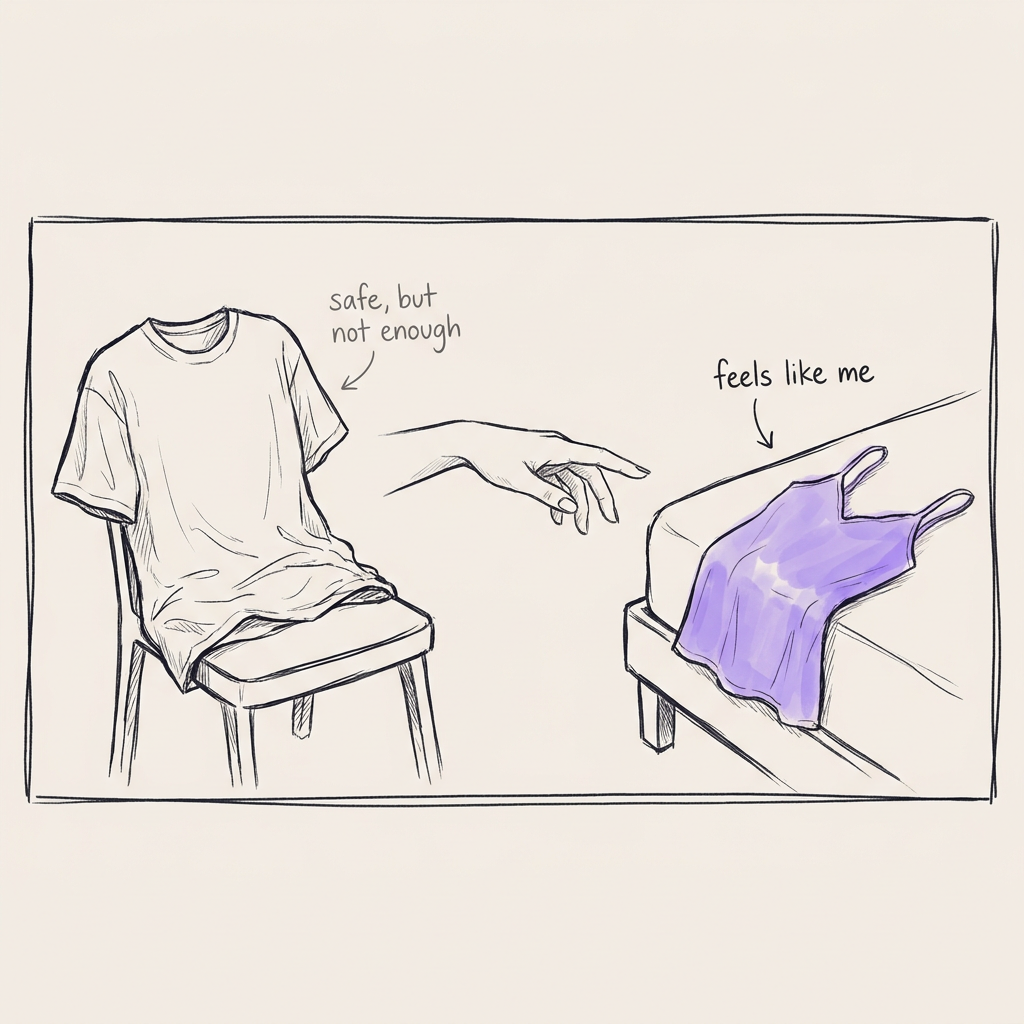
She reached for the oversized T-shirt again. Third night in a row. Not because she was cold, but because it covered everything she wasn’t ready for her partner to see.
That moment is more common than most people realize. Research suggests that up to 73% of breast cancer survivors experience changes in their intimate lives after surgery. But the statistics don’t capture what it actually feels like to stand in front of someone who loves you and wonder if they see you or your scars.
Most advice on this topic stays general: communicate with your partner, take it slow, consider therapy. That guidance is sound. But it leaves the real, specific, Tuesday-night questions unanswered. What does “taking it slow” actually look like? What do you wear when a hospital gown was the last thing that touched your chest? How do you bridge the gap between wanting closeness and feeling exposed?
Your Body Changed. Your Need for Connection Didn’t.
A mastectomy changes the physical landscape of your chest in ways that affect sensation, appearance, and how touch registers. Some women lose feeling entirely in the chest area. Others experience heightened sensitivity or nerve pain where tissue was removed. Reconstruction, if you chose it, adds its own layer of adjustment. Flat closure brings a different set of changes.
None of this erases the desire for physical closeness. It does mean that what felt good before may feel different now, and figuring out that new map takes patience with yourself.
One thing that helps: separating the physical changes from your worth as a partner. Your body went through something enormous to keep you here. The scars are evidence of that, not a flaw to hide. Believing this intellectually is one thing. Feeling it when someone’s hand is on your waist is another. That gap between knowing and feeling is where the real work happens.
Key takeaway: Sensation and appearance change after mastectomy, but the need for closeness doesn’t. Give yourself permission to relearn what feels good without rushing the process.
What “Going Slow” Actually Looks Like
Every article about intimacy after breast cancer says “go slow.” Almost none explain what that means in practice.
Going slow might mean starting with touch that has nothing to do with your chest. Holding hands on the couch. A long hug with clothes on. Lying next to each other and just talking in the dark. These aren’t substitutes for intimacy. They are intimacy. Physical closeness exists on a spectrum, and re-entering it gradually lets you rebuild trust in your own body at your own pace.
When you’re ready for more, some practical specifics help. Dim lighting can ease the transition if you’re not yet comfortable being seen fully. A soft camisole or pocketed bra designed for after surgery gives you coverage where you want it while still feeling like yourself. Positioning matters too: some women find that being on top gives them more control over what’s touched and how, which reduces anxiety.
The point isn’t a checklist. It’s giving yourself options so that “ready” doesn’t have to mean “ready for everything at once.”
Key takeaway: Going slow means building a bridge of small, comfortable steps. Start with the closeness that feels safe and expand from there.
What to Wear When Getting Dressed Feels Vulnerable
This is the part most articles skip entirely. They’ll mention “try wearing something that makes you feel confident” without acknowledging that getting dressed for intimacy after a mastectomy is its own emotional event.
The right intimate apparel can be a genuine bridge. Not because it hides anything, but because it gives you a layer of control over what you reveal and when. A well-fitted camisole or bralette designed for post-surgery bodies can make the difference between feeling exposed and feeling intentional about how you present yourself.
If you wear a breast form or prosthesis, there are options designed to look and feel natural under soft fabrics. If you’ve chosen flat closure, camisoles with gentle structure can offer comfort without pretending your body is something it’s not.
The fitting room is often where this conversation starts. A certified fitter who has helped thousands of women navigate this exact moment can show you what works with your specific body and your specific comfort level. That practical, hands-on guidance is hard to replicate from an article alone, which is why a private fitting can be a turning point.
Key takeaway: What you wear matters not as a costume but as a tool for feeling like yourself. The right fit gives you control over the moment.
Having the Conversation Your Partner Needs Too
Partners carry their own weight through this. Many feel afraid of saying the wrong thing, touching the wrong place, or making you feel like your body is being evaluated. Some are processing their own grief about the changes and don’t know where to put it without making the conversation about themselves.
Telling your partner what you need is important. So is asking what they’re feeling. A conversation that sounds like “I want to be close to you, and I’m still figuring out what feels right. Can we figure it out together?” opens a door that silence keeps shut.
A few specifics that partners find helpful to hear: where you’re comfortable being touched and where you’re not (yet). Whether you want the lights on or off. Whether you’d rather they ask before touching your chest or let you guide their hand there when you’re ready. These aren’t awkward details. They’re the map that replaces guessing with connection.
If the conversation feels too big to have alone, couples counseling with a therapist experienced in cancer-related intimacy issues can give you both a structured space to talk. That’s not a sign of a struggling relationship. It’s two people taking the work of reconnection seriously. If you’re noticing the emotional weight building up beyond just the intimacy question, a professional perspective can help you sort through what belongs where.
Key takeaway: Your partner is navigating this too. Direct, specific communication replaces the guessing that creates distance.
Timing Is Yours to Decide
Doctors will give you a physical clearance timeline based on your surgery and recovery. That’s the medical answer. The emotional timeline is entirely yours.
Some women want physical closeness weeks after surgery. Others take months or longer. Both are normal. The recovery process has its own pace, and your body will tell you when it’s ready if you listen to it rather than measuring yourself against someone else’s calendar.
What matters more than when is how you feel about the decision. If you’re choosing closeness because you genuinely want it, that’s different from choosing it because you feel you “should” or because you’re worried your partner is losing patience. One comes from desire. The other comes from obligation. Your body can tell the difference, and so can your partner.
If you’re navigating this with a new partner rather than a long-term one, the vulnerability has an extra layer. Opening up about your journey to someone new takes courage, and the right person will meet that honesty with care.
Key takeaway: There is no standard timeline. The right moment is the one that feels chosen, not pressured.
The Confidence That Comes Back in Pieces
Rebuilding physical confidence after mastectomy doesn’t happen in a single breakthrough moment. It comes back in small pieces. The first time you catch your reflection and don’t flinch. The first time your partner’s hand on your back feels good instead of loaded. The first time you reach for something other than that oversized T-shirt.
Each one of those moments is real progress, even when it doesn’t feel dramatic. Building self-love after breast cancer is a practice, not an event. Some days will feel easier than others. That’s the honest truth about it.
What helps most is practical support from people who understand this territory. Not just the emotional side, but the physical, tactile, what-do-I-actually-put-on-my-body side. That’s the space where a boutique staffed by certified fitters who’ve guided thousands of women through exactly this chapter can make a quiet but meaningful difference.
Key takeaway: Confidence returns gradually, in small moments. Practical support speeds the process along.
Find What Feels Right
You don’t have to figure this out alone, and you don’t have to figure it all out at once. If you’re at the point where finding the right intimate apparel could help you feel more like yourself, Front Room Underfashions offers private, one-on-one fittings with certified fitters who understand post-mastectomy bodies. No rushing, no judgment, no pressure. Just help finding what feels right for you, wherever you are in this process.
Schedule a fitting at one of our three mid-Michigan locations, including our fitting rooms inside the Herbert Herman Cancer Center and Karmanos/McLaren Greater Lansing.