
Your surgeon just explained two options, and both sound enormous. One removes the tumor. The other removes the breast. The clinical comparison is important, but there is a whole chapter that most resources skip: what daily life actually looks like after each surgery, from the bras you wear to the way a seatbelt fits across your chest.
We have been fitting women after both surgeries for nearly 40 years at Front Room Underfashions. The medical decision belongs to you and your care team. What we can share is the practical reality of each path once you are home, healed, and getting dressed every morning.
The Medical Basics: What Each Surgery Removes
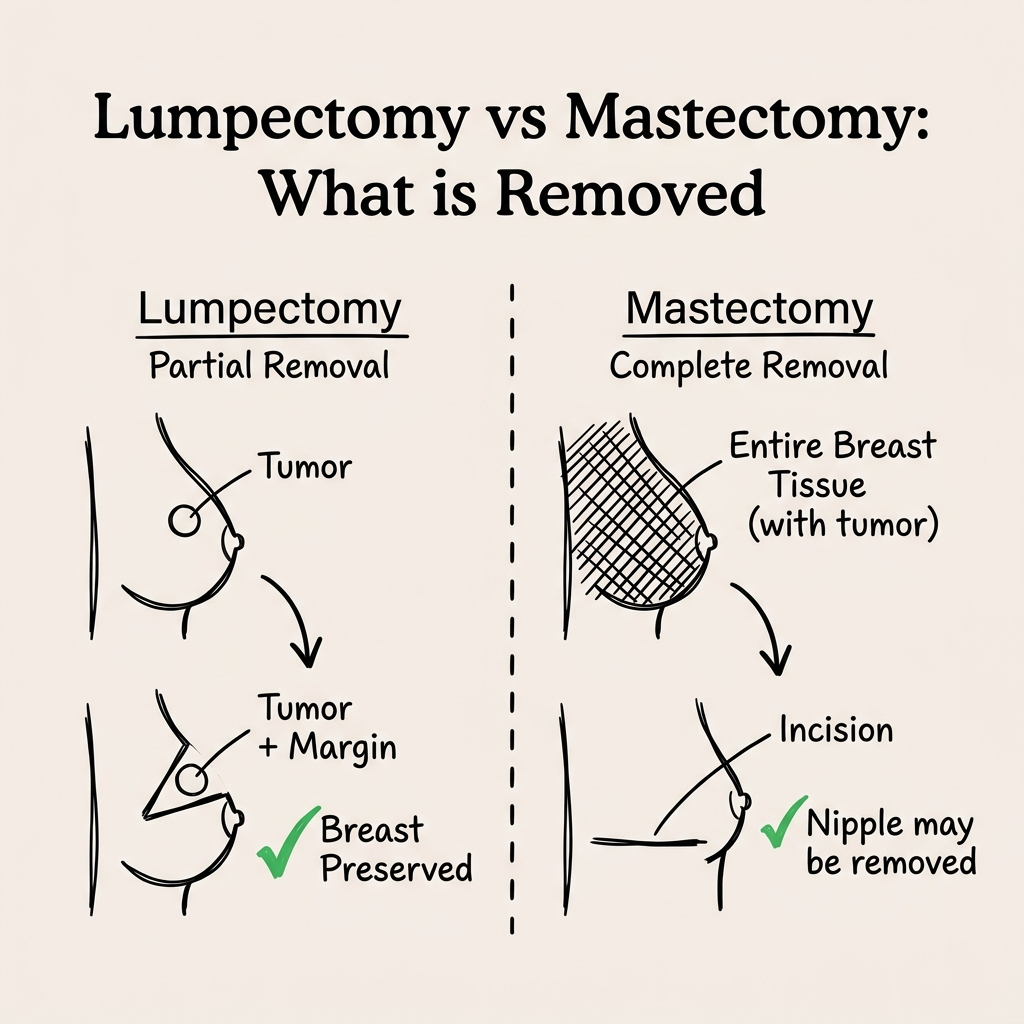
A lumpectomy (sometimes called breast-conserving surgery) removes the tumor and a margin of surrounding tissue while preserving most of the breast. Radiation therapy almost always follows to reduce the chance of local recurrence (the cancer returning in the same breast).
A mastectomy removes the entire breast, and sometimes surrounding tissue like lymph nodes. Some women choose a double mastectomy (both breasts) for added peace of mind, particularly those with a BRCA gene mutation (an inherited change that significantly raises breast cancer risk).
Survival rates for early-stage breast cancer are comparable for both surgeries. The five-year survival rate is roughly the same whether you choose lumpectomy with radiation or mastectomy. Local recurrence rates are slightly higher after lumpectomy (around 4 to 8 percent over ten years) compared to mastectomy (around 2 percent), but overall survival outcomes remain similar.
Key takeaway: Survival rates are comparable. The difference between these surgeries shows up most in recovery, daily comfort, and the garments you will need afterward.
How a Lumpectomy Changes Your Daily Life
After a lumpectomy, the breast may look or feel different depending on how much tissue was removed and where the tumor was located. Changes in shape, size, or symmetry are common.
Radiation therapy can also increase skin sensitivity during recovery. Underwires, seams, and rough fabrics may become uncomfortable, especially around treated areas.
Read more: Skin Care During Radiation Treatment
Many women find that their pre-surgery bras no longer fit the same afterward. A certified fitter can help adjust for changes in shape and reduce pressure on sensitive tissue.
Key takeaway: A lumpectomy preserves the breast, but changes in shape and radiation-related skin sensitivity often mean your old bras will not work the same way.
How a Mastectomy Changes Your Daily Life
A mastectomy creates a larger physical change and usually involves wearing a post-surgical compression bra during early healing.
After recovery, some women choose reconstruction, while others choose to remain flat. Some use breast forms regularly, occasionally, or not at all depending on comfort and personal preference.
Support needs can also change over time. Different bras, prostheses, or clothing styles may feel more comfortable during different stages of recovery.
Read more: Mastectomy Recovery Timeline: What to Expect Week by Week (And Which Bra You’ll Need)
The mastectomy recovery timeline varies, but most women go through several garment stages: surgical bra, then a soft recovery bra, then a fitted mastectomy bra or a regular bra depending on whether they are using a prosthesis.

Key takeaway: After a mastectomy, your garment needs will evolve through several stages, from surgical bras to fitted mastectomy bras or breast forms, and you get to choose what works for your life.
Recovery: What to Expect From Each Path
Lumpectomy recovery is usually shorter, with many women returning to normal activities within one to two weeks. Radiation therapy may extend recovery with fatigue and skin sensitivity that can affect clothing and bra comfort.
Mastectomy recovery takes longer and often includes temporary surgical drains and limited mobility during healing. Gentle exercises are commonly used to help restore range of motion over time.
Both surgeries can involve emotional as well as physical adjustment, including changes in body image, comfort, clothing fit, and intimacy.
Key takeaway: Lumpectomy has a shorter surgical recovery, but radiation adds weeks of treatment. Mastectomy recovery is longer physically, and both paths involve adjusting to how your body feels in clothing.
Questions Your Doctor May Not Cover (But a Fitter Can)
The surgical decision is between you and your care team. But once you are home, a different set of questions comes up:
- Will my bras still fit after a lumpectomy? Possibly not. Even a small change in tissue volume or shape can affect how a bra sits.
- What is a mastectomy bra, and do I have to wear one? A mastectomy bra has pockets that hold a breast form in place. You do not have to wear one, but many women find it gives them the shape and support they want. Knowing what works after surgery helps you decide.
- When can I get fitted for a new bra? Your surgical team will clear you, usually six to eight weeks after surgery. A certified fitter will take it from there.
- Can I exercise in a sports bra with a prosthesis? Yes. Some sports bras are designed to hold breast forms securely during activity.
- Does insurance cover mastectomy bras and breast forms? Under the Women’s Health and Cancer Rights Act, most insurance plans cover post-mastectomy products including bras, breast forms, and prostheses. An ABC-accredited facility like Front Room can help you navigate that process.
Key takeaway: The practical questions about bras, breast forms, and daily comfort start after surgery, and a certified fitter is the best person to help you answer them.
Everyone Has Their Own Path
Recovery after lumpectomy or mastectomy looks different for every woman. Some people want lightweight support during healing, others need help with asymmetry, prosthetics, or finding bras that feel comfortable again after treatment.
At Front Room Underfashions, we have worked with women navigating those changes for nearly 40 years, including at our locations inside cancer centers. If questions come up during recovery, our ABC-certified fitters are available to help you explore options at your own pace.
Free fittings and consultations are always available, even if you are not sure what you need yet.