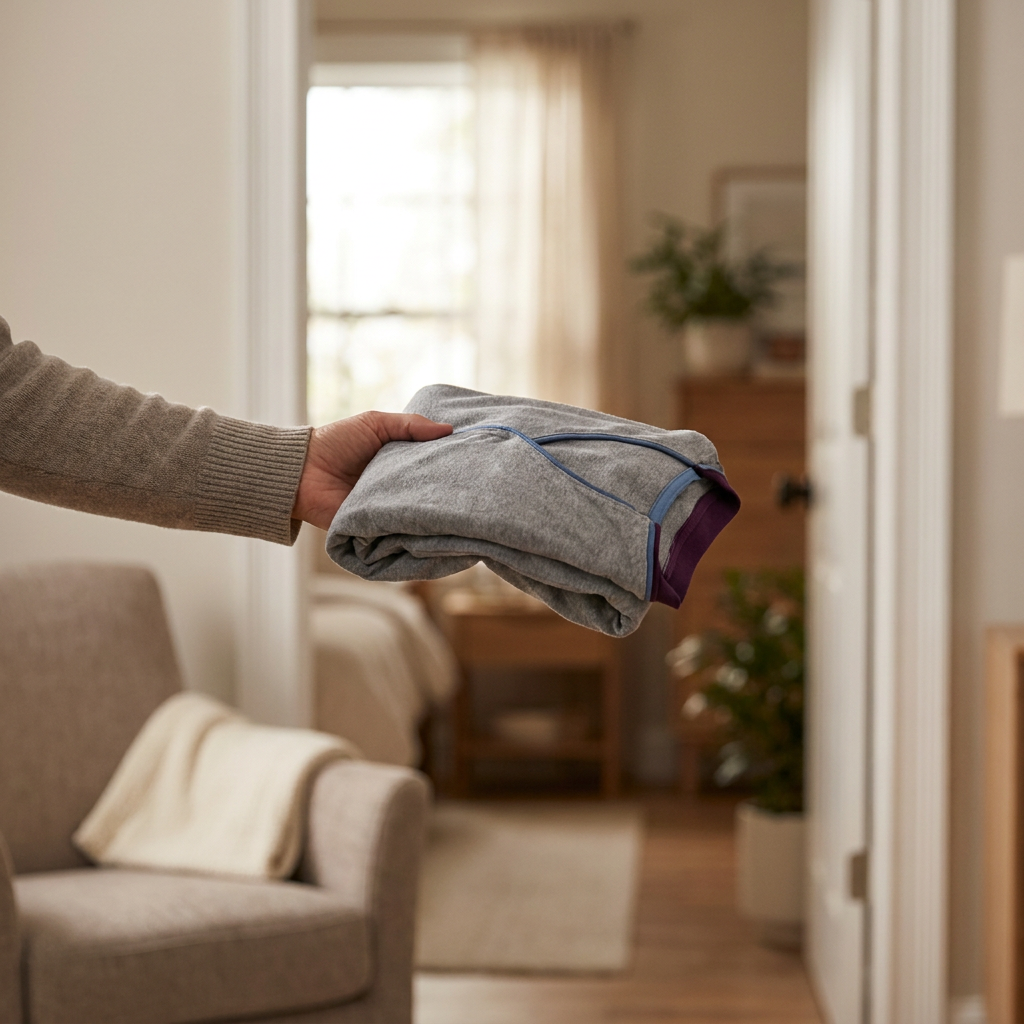
She came home from the hospital on a Tuesday. You had the pillows arranged, the prescriptions filled, water on the nightstand. But when she stood in front of the closet that first morning, nothing worked. She couldn’t lift her arms above her shoulders. The button-down you found was too stiff against the incision. And when she said “I don’t even know what to wear anymore,” you both knew she wasn’t really talking about clothes.
If you’re a partner, a daughter, a sister, or a friend trying to figure out how to support someone with breast cancer, you’ve probably already read the advice: be present, listen, help with meals. All of it is true. But none of it tells you what to do at 6 AM when she’s crying in the bathroom before a chemo appointment, or how to help her get dressed when her surgical drains are still in, or what to say when she tells you she’s fine and clearly isn’t.
This guide covers the practical, physical, and emotional dimensions of caregiving that most resources leave out.
What to Say (and What to Stop Saying)
The words that help most are simpler than you think. “I’m here” works. “What do you need today?” works. “You don’t have to talk about it if you don’t want to” works. Specific offers work better than open ones: “I’m going to the grocery store at 3, what can I pick up?” beats “Let me know if you need anything.”
What doesn’t help: “Everything happens for a reason.” “You’re so strong.” “My neighbor had breast cancer and she’s totally fine now.” “At least they caught it early.” These statements are meant to comfort, but they close the conversation instead of opening it. They tell her how to feel instead of making space for how she actually feels.
Avoid language that frames cancer as something she needs to fight or conquer. She is not in a battle. She is a person going through treatment, and some days the bravest thing she does is get out of bed. That counts.
If you don’t know what to say, say that. “I don’t know the right words, but I’m not going anywhere” is more honest and more helpful than a rehearsed pep talk.
Key takeaway: Specific, small offers and honest “I don’t know” statements help more than inspirational cliches.
The Physical Comfort Gap Nobody Talks About
Every caregiving guide mentions “help with practical things.” Few explain what that actually means during breast cancer recovery.
After surgery, her body changes in ways that affect daily life from the moment she wakes up. She may not be able to raise her arms for weeks. Surgical drains need emptying and tracking. Incisions are sensitive to seams, tags, and fabrics that never bothered her before. Bras she’s worn for years are suddenly impossible to put on, uncomfortable to wear, or medically inappropriate.
Here’s what to have ready at home:
- Front-closure or step-in tops and bras. Anything that goes over the head is out for weeks, sometimes months. A post-surgical compression bra with front closure makes getting dressed possible instead of painful.
- Soft, tagless fabrics. Cotton and bamboo against the skin. Avoid anything with underwire, rough lace, or rigid seams near the chest or underarm.
- A few button-down shirts in soft flannel or jersey. Not dress shirts. Something that opens easily, breathes, and doesn’t press against bandages.
- A wedge pillow or extra pillows for sleeping upright. After surgery, lying flat is uncomfortable and sometimes not recommended. She’ll sleep propped up for a while.
- A small notebook near the bed. For tracking drain output, medication times, and questions for the next doctor visit.
These aren’t luxuries. They’re the difference between a rough first week home and one where she can focus on healing instead of struggling with basic daily tasks. Understanding the full recovery timeline helps you anticipate what she’ll need at each stage instead of scrambling to figure it out in the moment.
Key takeaway: Physical comfort after breast surgery requires specific items and planning. Know what to stock before she comes home.
How to Help When She Says She’s Fine
She will say she’s fine. She’ll say it the morning after diagnosis, the day before surgery, and the afternoon she comes home with drains pinned inside a surgical bra. She’ll say it when she’s not fine at all, because she doesn’t want to be a burden, because she doesn’t have the energy to explain, or because she genuinely doesn’t know how to name what she’s feeling yet.
Your job is not to argue with “I’m fine.” It’s to stay close and keep showing up with small, tangible acts of care.
Make the coffee without being asked. Handle the insurance calls. Drive her to the appointment and sit in the waiting room without checking your watch. When she wants to talk, stop what you’re doing and listen without jumping to solutions. When she doesn’t want to talk, sit with her anyway.
Pay attention to the things she stops doing. If she hasn’t left the house in two weeks, that’s information. If she’s stopped getting dressed, that’s information. If she used to love cooking and now lives on toast, that’s information. You don’t have to fix any of it in the moment. But noticing tells her she’s seen.
If getting dressed has become the thing she avoids, the clothing dimension of recovery matters more than most people realize. When everything in her closet reminds her of before, and nothing fits the body she has now, the closet becomes one more thing that hurts. Sometimes the practical step is finding what to wear after breast surgery that fits this chapter of her life, not the one before it.
Key takeaway: “I’m fine” is not your cue to back off. Keep showing up with quiet, consistent action.
Supporting Her Through Treatment Side Effects
Breast cancer treatment isn’t one thing. It’s surgery, possibly followed by chemotherapy, radiation, hormone therapy, or some combination. Each phase brings different side effects, and each phase changes what she needs from you.
During chemotherapy: Fatigue is the constant. She may have two or three good days after an infusion and then crash for a week. Learn her cycle so you can plan around it. Nausea, mouth sores, and sensitivity to smells are common. Cook bland foods. Open windows. Don’t wear strong cologne. Hair loss, when it happens, is a grief moment even when she says she expected it.
During radiation: Daily appointments for several weeks. The skin at the treatment site can become red, tender, and irritated. Bras and clothing that touch that area need to be especially soft, and she may need to rethink what she wears against her skin during this phase. Help her keep the area moisturized with approved creams and avoid anything that rubs or binds.
During hormone therapy: This is the long game. Hot flashes, joint pain, mood changes, weight fluctuation, and fatigue that can last years. She may look “normal” to the outside world while feeling anything but. Believe her when she tells you how she feels, even when she looks fine.
Through all of it, the exercises her care team recommends for regaining range of motion and strength are something you can support by gently encouraging without pushing. Offer to do them with her. Walk with her when she’s up for it. Let her set the pace.
Key takeaway: Each treatment phase brings different needs. Learn her treatment timeline and adapt your support to match it.
Taking Care of Yourself While Taking Care of Her
You can’t do this on empty, and you’re not helping anyone by pretending you can.
Caregiver burnout during cancer treatment is real and common. You may feel guilty for being tired when she’s the one going through treatment. You may feel guilty for grieving because it feels like your grief doesn’t count. It does. You’re losing things too: the future you planned together, the normalcy of daily life, the sense that everything will be okay. You’re allowed to feel all of that.
Find one person you can be honest with. A friend, a sibling, a therapist, a support group. Someone who will let you say “I’m scared” and “I’m exhausted” without immediately redirecting the conversation back to her. If that feels hard to find, professional support exists for caregivers and using it isn’t a sign of failure.
Keep one thing that’s yours. A walk, a gym session, coffee with a friend, thirty minutes with a book. Not because self-care is trendy, but because you need something in your day that isn’t cancer.
Accept help when people offer. When someone says “what can I do?” give them a task: pick up the kids Tuesday, bring dinner Thursday, mow the lawn this weekend. People want to help. Let them.
Key takeaway: Caregiver burnout is a real risk. Protect your capacity so you can sustain your support over months, not just weeks.
Managing Family Communication
If there are children, parents, or extended family involved, you may end up as the person relaying updates, fielding questions, and deciding how much to share. This is exhausting.
Set up a system early. A group text, a CaringBridge page, or a designated family contact who handles the “how is she doing?” calls so you don’t have to answer the same question thirty times a day. Let her decide what gets shared and what stays private. Her diagnosis is her information.
With children, honesty scaled to their age works better than avoidance. Kids notice when something is wrong, and silence fills with imagination that’s usually scarier than the truth. Talking to kids about a breast cancer diagnosis can be one of the hardest conversations you have, but children do better with age-appropriate facts than with the anxiety of not knowing.
Key takeaway: Designate a communication point person early and let the patient decide what gets shared.
You Don’t Have to Figure This Out Alone
Supporting someone through breast cancer is one of the most demanding things a person can do. It’s physical, emotional, logistical, and relentless, and there is no manual that covers every situation you’ll face.
But you’re not the first person to stand in that bathroom doorway wondering what to do. Thousands of partners and family members have walked this same path, and the ones who do it well share a few things in common: they show up consistently, they pay attention to the small physical details that make daily life bearable, and they ask for help when they need it.
If you’re not sure what she needs for comfort after surgery, what kind of bra works with drains or a prosthesis, or how to help her feel like herself in clothes again, come talk to us. Front Room Underfashions has been helping families navigate exactly this for over 40 years, with ABC-certified fitters who sit at the intersection of physical comfort and emotional recovery every day. You can call, visit any of our three locations, or just walk in and ask.
You don’t need an appointment. You don’t need to know what to ask for. You just need to show up, and we’ll take it from there.